
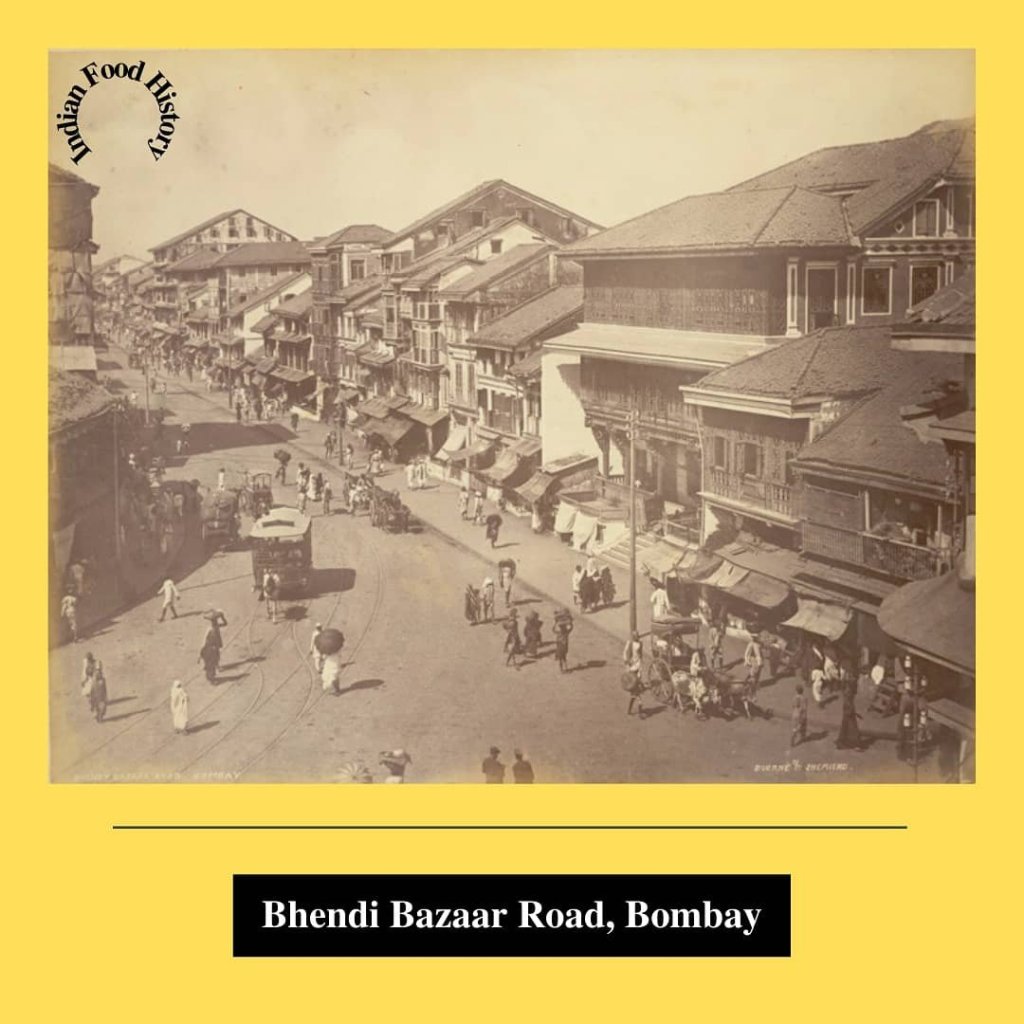
Photograph showing a general street scene of Bhendi Bazar with horse-drawn trams in Bombay (Mumbai) taken by Bourne & Shepherd in the 1880s, part of the Earl of Jersey Collection, ‘India. Bombay to Madras’ album.
The capital of Maharashtra on the west coast of India, Bombay was originally a group of fishing villages. By the 14th century it was controlled by the Gujarat Sultanate who ceded it to the Portuguese in the 16th century. In 1661 it passed to the English as part of the dowry brought to Charles II by the Portuguese princess Catherine of Braganza.
In the 17th century, the British built up fortifications around the original Portuguese settlement of the area overlooking the harbour. In the 1760s the fortifications were enhanced as the British were engaged in war with France in both Europe and India.
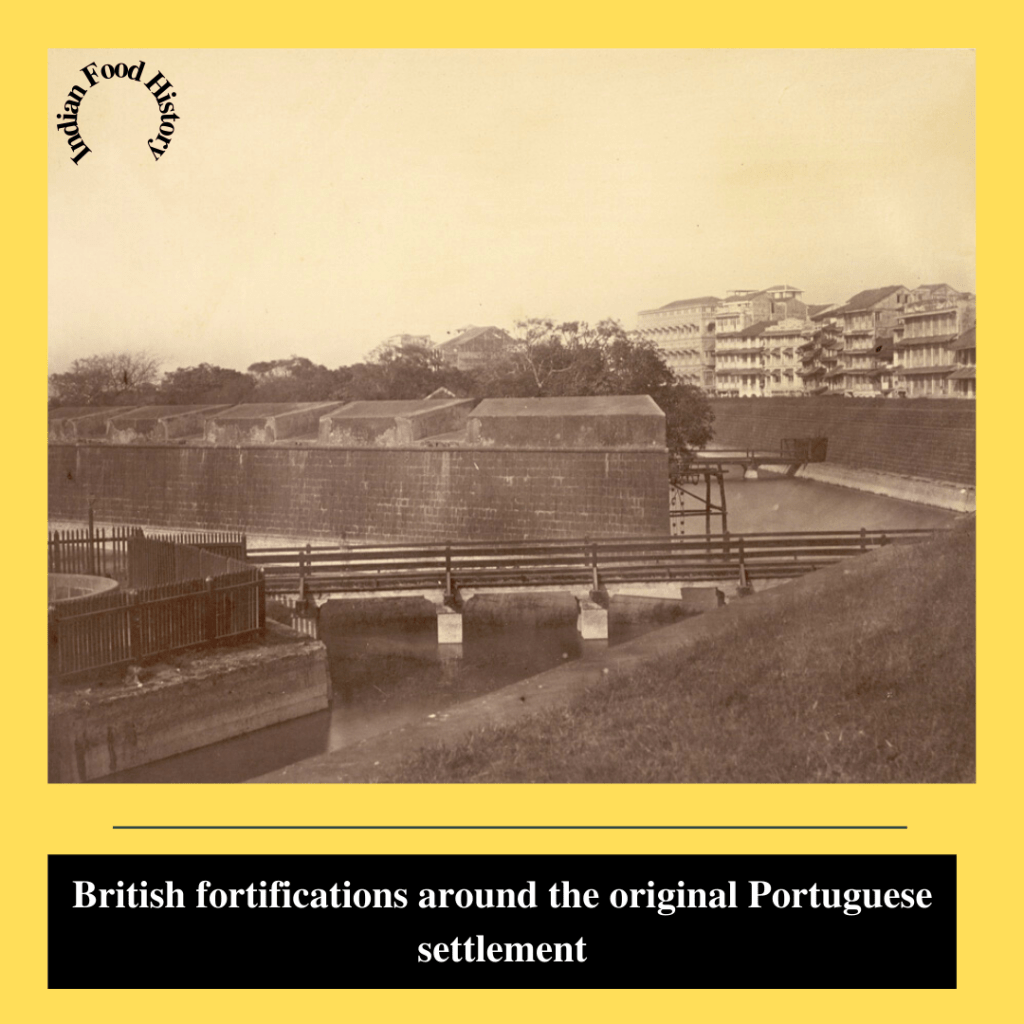
By the 19th century the British had established control and in 1864 the fort walls were torn down and the area was converted into the central district of Bombay city. The removal of the ramparts of the fort opened up the city to new developments in architecture, and in the second half of the 19th century accelerated building activity was fuelled by its booming maritime trade.
The Bhendi Bazaar was a bustling commercial area of the city, crossed by narrow streets and lanes containing crowded tenements and dwellings.
©British Library Board
https://imagesonline.bl.uk
 INDIAN FOOD HISTORY